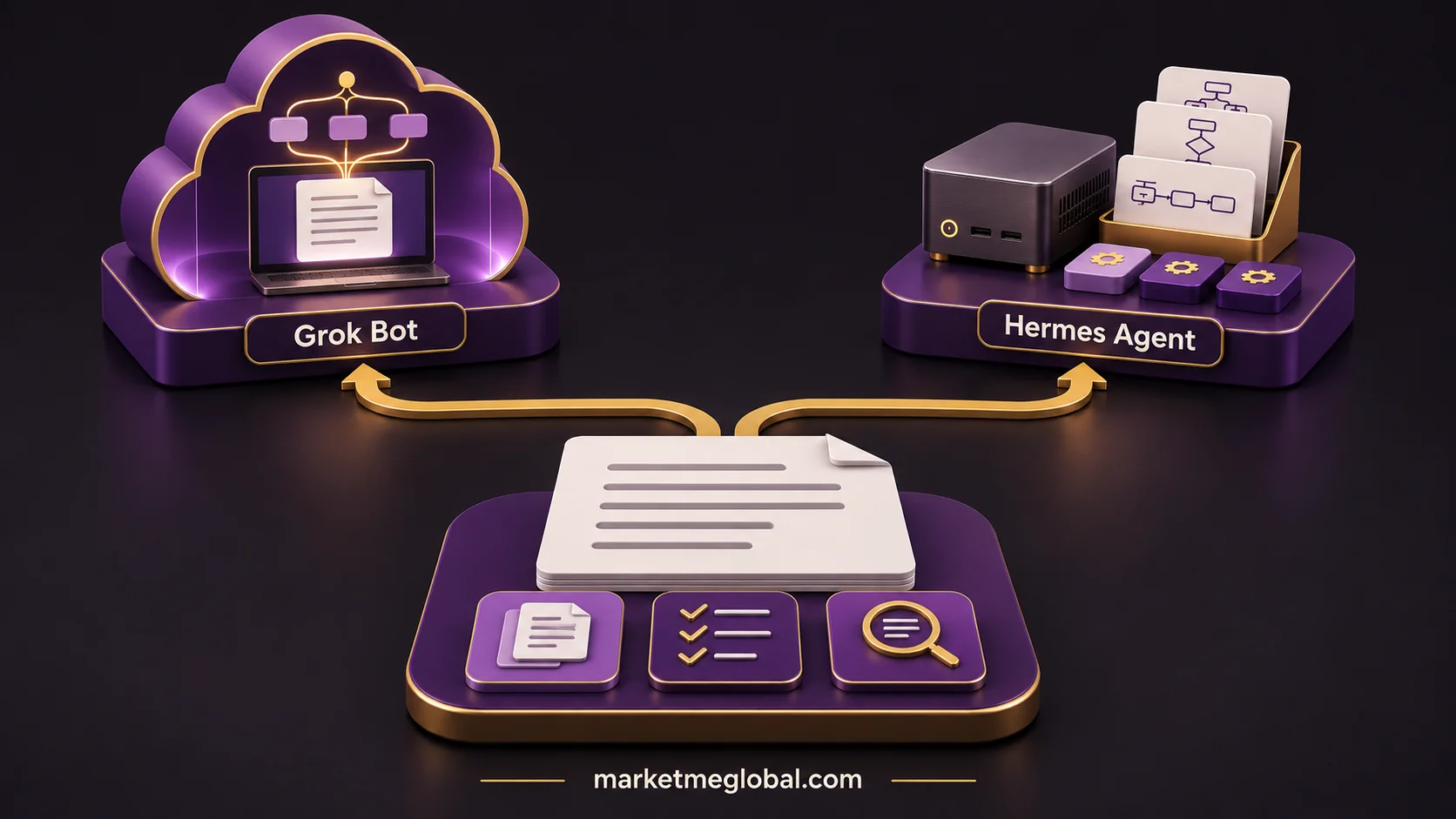
An AI agent becomes useful when it can take a real brief, work with the right information and return something you can check. Grok Bot and Hermes Agent both aim to do that, but they give you different choices about the computer, models and running costs behind the work.
This comparison uses official product pages and documentation checked on 16 November 2026. Recommendations are our editorial judgement about workflow fit. The practical trial below is a suggested evaluation, not a claim that we benchmarked the two products.
The quick answer
Trial Grok Bot first if you want a managed cloud teammate and prefer the service to handle its computing environment and model routing. Trial Hermes Agent first if choosing the model, running on your own hardware or customising the setup is central to your work. Hermes also offers hosted options, so the choice is broader than cloud versus local.
What are Grok Bot and Hermes Agent?
Grok Bot is the agent product linked from x.ai. It is distinct from the ordinary Grok chat app. You give named Bots responsibilities and work to complete, rather than treating every request as an isolated question. The official Bot management guide describes persistent roles, conversations and working context.
Hermes Agent is the MIT-licensed, open-source agent from Nous Research. You can run it on your own machine or use optional cloud hosting. Its Bot Mode also supports named specialists with their own models, memory and skills. A comparison that describes Hermes as only a terminal chatbot misses that current desktop workflow.
An agent is the surrounding working system: its instructions, tools, stored context and permissions. The model supplies the reasoning and generation within that system. Choosing one agent does not, by itself, tell you which model will handle every task.
GrokBot vs Hermes Agent at a glance
| Decision | Grok Bot | Hermes Agent |
|---|---|---|
| Where work runs | Managed, persistent cloud computer | Your machine or optional hosted deployment |
| Model selection | Service chooses; no customer model picker | Choose configured providers and models |
| Recurring work | Skills and scheduled or event-driven routines | Skills, routines and gateway automation |
| Specialist Bots | Named roles and ongoing conversations | Bot Mode profiles with model, memory and skills |
| Local inference | Cloud service; do not assume local-only processing | Supported local models, subject to hardware fit |
| Cost structure | Eligible plan, usage allowance and possible extra usage | Free agent software; model, tool and hosting costs depend on setup |
| Operational responsibility | Review access, settings and the work produced | Those reviews plus maintenance of any setup you operate |
Sources: Grok Bot computer and apps, Grok Bot FAQ, Grok Bot routines, Hermes providers, Hermes Bot Mode and Hermes hosting and pricing.
Setup: how much do you want to manage?
Grok Bot: start with a defined job
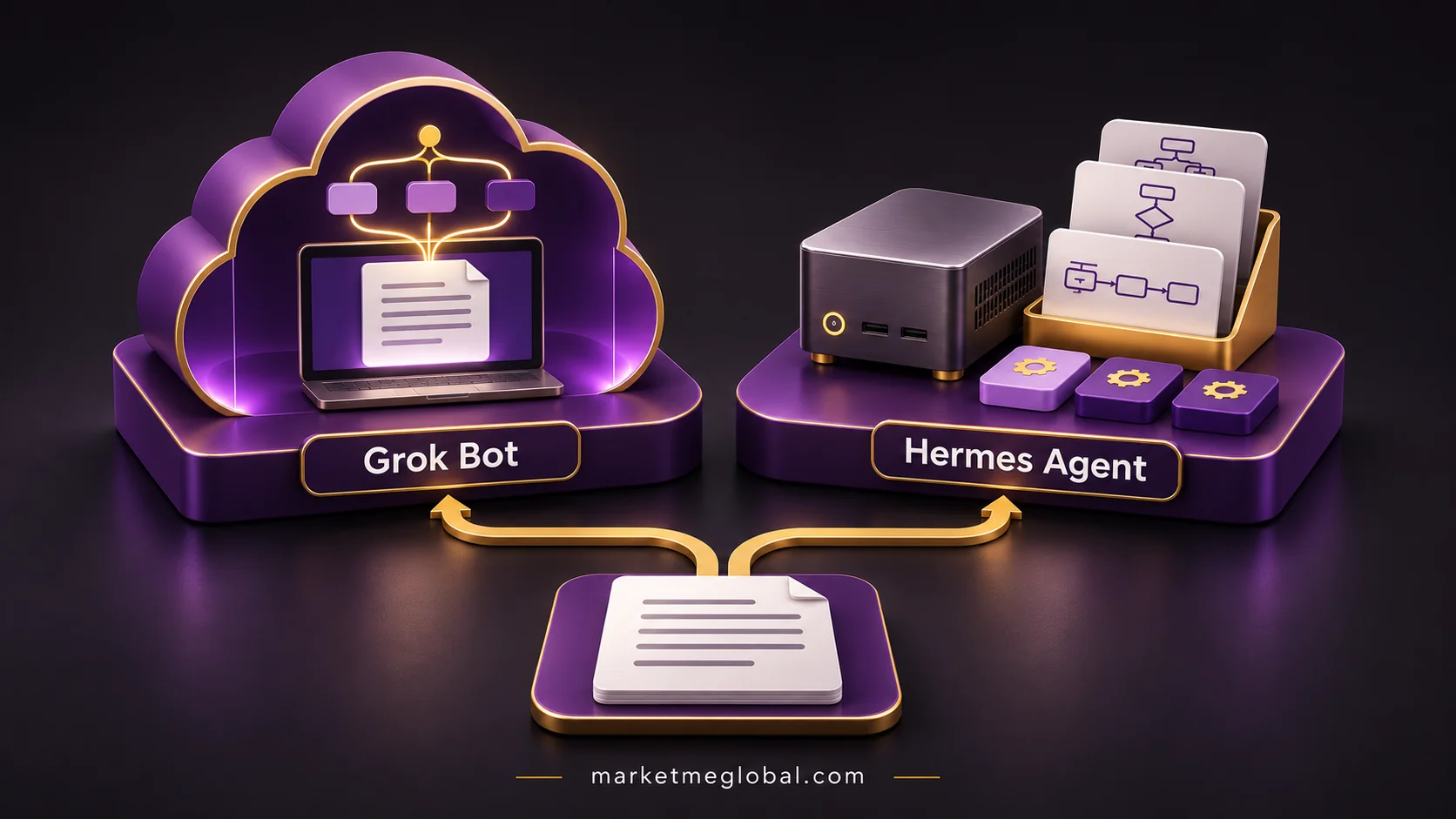
Create a Bot, explain its responsibility, provide the permitted sources and give it one task with an observable finish. That is the path in the official creation guide. Its cloud computer retains files and signed-in sessions between tasks, and work can continue while your laptop is closed.
For a small agency, a useful opening assignment might be a weekly campaign summary from approved exports. Start with those files before connecting the advertising account itself. That lets you inspect calculations and writing without giving the agent a way to alter a live campaign.
Hermes Agent: desktop, provider and tools
Hermes provides desktop packages and a command-line installation route. After installation, choose a model provider and confirm one ordinary conversation works. The quickstart recommends getting that baseline working before adding messaging, scheduling or more tools. Use the official download links and check platform support for your machine.
Nous Portal setup can combine model access and hosted tools through one account. Bringing your own providers is another route. Both still require decisions about which capabilities the agent should have. A desktop interface reduces terminal work; it does not remove responsibility for the accounts and files you connect.
Model choice: one important difference
The Grok Bot FAQ currently says there is no model picker. The service chooses a model for the task, potentially from a first-party or third-party provider, and does not display the underlying model for an individual request. You are choosing a managed service rather than pinning every task to one named model.
Hermes supports configurable model providers and compatible self-hosted endpoints. Its Local Models feature can also download and run a suitable open model on supported hardware. This makes Hermes worth evaluating when an approved provider or a local inference requirement is part of the brief.
Keep the comparison fair. Changing the model, reasoning settings or connected tools can change the result. Record those details when you can, and mark a managed model choice as undisclosed when you cannot. Do not attribute every difference in output to the agent application alone.
Memory and repeat work: verify what was saved
Grok Bot can develop role context over time, while skills and routines turn an approved process into recurring work. A skill describes the method; a routine determines when it runs. Check the timezone, inputs and failure behaviour before relying on an automated briefing.
Hermes persistent memory separates compact agent notes from the user profile and can search previous sessions. Its documentation makes a useful distinction: saying a fact was remembered is different from actually saving it. Memory also has capacity limits and session behaviour, so it should not be treated as an infallible archive.
Try a simple continuity check. Give the agent an approved tone, reporting folder and rule for missing data. Start a fresh session, ask what it retained and then run the task again. Correct any mistaken assumption before saving the process as a reusable skill. Store the underlying evidence in a reviewable project file.
Privacy and permissions: follow the complete data path
All Grok Bots on your account share one cloud computer, including its files and browser sessions. Separate names and roles do not create separate security boundaries. Before connecting two client accounts, decide whether sharing that environment is appropriate for the access you intend to grant.
The Grok Bot security documentation explains model routing, account privacy settings and controls that vary by plan. Check the applicable data settings and service terms before uploading confidential material. Do not infer a particular training or retention arrangement from the product name alone.
Running Hermes on your laptop does not automatically keep every request there. If you select a cloud model, send a message through a messaging service or enable a hosted search tool, those services are part of the data path. Local inference can reduce external processing, but a fully local workflow also needs local tools and appropriate network settings.
Hermes documents command approvals, user authorisation and isolation options. Grok Bot documents action review and approval boundaries. For either product, keep access narrow and make the stopping point explicit: a prepared draft is a different permission from sending it, publishing it or changing an account.
Pricing: compare the bill and the work you approve
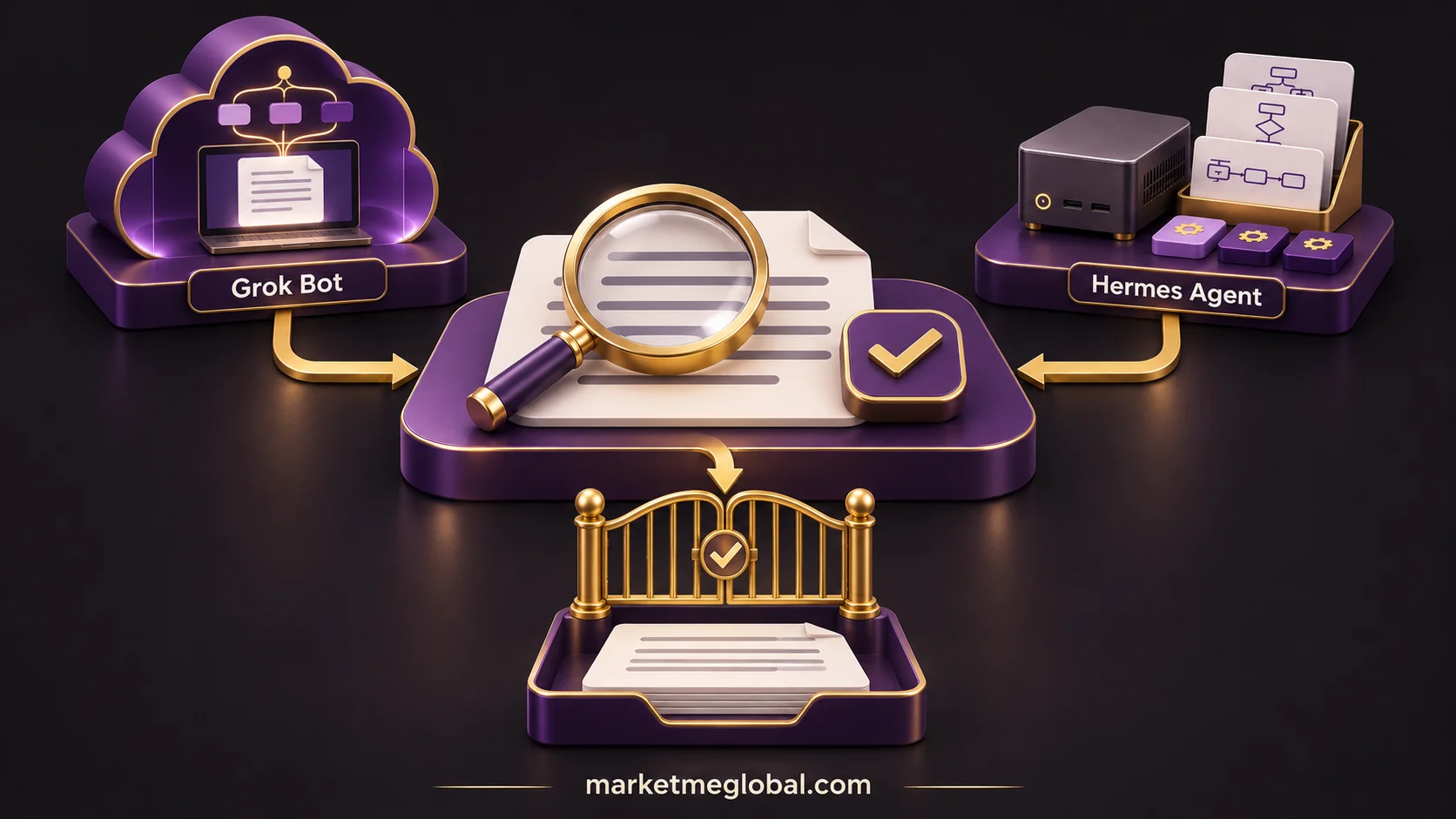
On 16 November 2026, the Grok Bot public pricing page lists Premium at US$30/month, Super at US$100/month and Ultra at US$200/month, billed monthly. These are reference prices from that page, not a checkout quote for every country or account. Read the included usage and extra-usage conditions.
The billing FAQ distinguishes the current X Subscription route from legacy Cursor accounts and eligible linked subscriptions. Check your own dashboard before buying another plan. A monthly subscription is not a promise of unlimited agent work.
Hermes Agent software is free under its MIT licence. The official Hermes page separately lists optional Nous Portal Plus, Super and Ultra plans at US$20, US$100 and US$200 per month. Provider usage, tools, hosting and hardware can still affect the total. You can also use your own provider rather than choosing a Portal plan.
Use a practical cost sheet: subscription or inference charges, paid tools, hosting, setup time and corrections. Compare the cost of an approved result. A cheaper run that needs twenty minutes of repair may be poor value; a more expensive plan can also be unnecessary when a smaller setup reliably completes the job.
One brief, two workflows: a useful first trial
Take a recurring task you already understand. A weekly client update works well because it has clear inputs, a concrete output and facts you can check. Use the same sanitised files and acceptance criteria for both products.
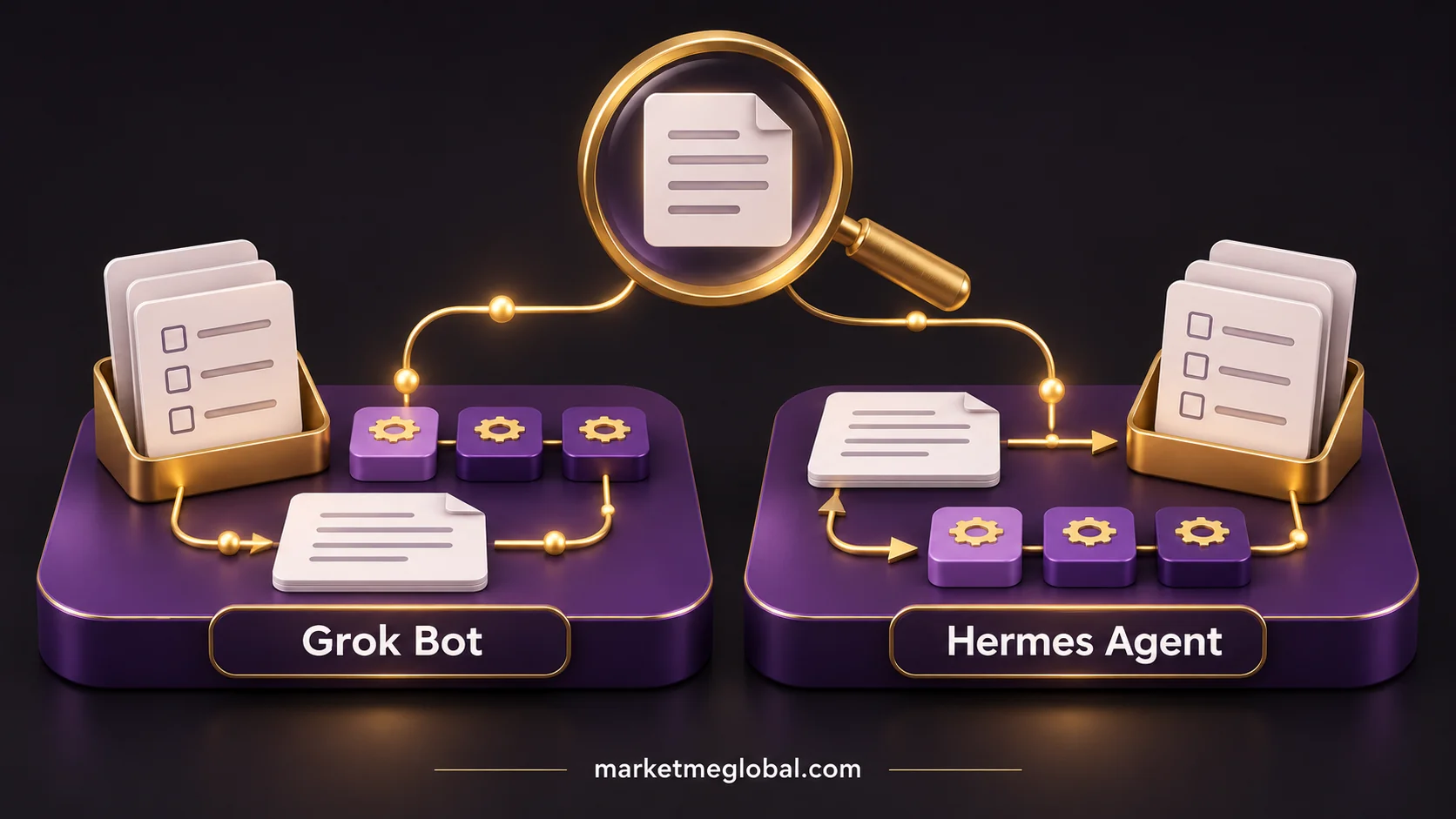
Example brief: Use only these three approved campaign exports to draft a one-page client update. Compare this week with last week, show the calculation behind each percentage change and flag missing information. Save the draft for review. Do not send messages, publish anything or change campaign settings.
- Check the evidence. Can you trace every important number and claim to the supplied material?
- Open the deliverable. Does the file exist, display correctly and meet the requested structure?
- Test a revision. Change the tone or request a shorter version and check that the facts survive.
- Test a failure. Remove one input and see whether the agent reports the gap rather than inventing a result.
- Repeat in a new session. Check the saved instructions and measure the work needed to reach approval.
Record elapsed time, corrections, usage and interruptions. Keep the first trials manual. Schedule the task only after you trust the inputs, output and failure handling. A suggestion to automate more work should not itself grant permission to do so.
Which one should your business trial first?
- Choose a Grok Bot trial when you prefer a managed cloud environment and want to organise ongoing work around named teammates.
- Choose a Hermes trial when model selection, local deployment or deeper configuration is a requirement and you can maintain the chosen setup.
- Consider hosted Hermes when you want its configurable agent system without operating all of the infrastructure yourself.
- Keep the first task small when your process is still unclear. Define the outcome and source material before adding more agents.
If you mainly need help writing, researching or answering questions, compare the main AI assistant workflows first. For work that spans tools, our guide to managing AI agents can help you define responsibilities and review points. If you want help planning a business workflow, explore Market Me Global’s AI agent services.
Frequently asked questions
Is Grok Bot the same as the Grok chatbot?
Can I choose the model in Grok Bot?
Is Hermes Agent completely free?
Does self-hosting Hermes mean my data stays private?
Will either agent keep working when my laptop is closed?
Which agent is better for a small business?
Try one of our AI chatbot solutions
Meet the Market Me Global AI assistant. Ask about our services or how a website chatbot could help your business.
Enable optional AI chat, then use the chat button in the bottom-right corner. This button can open it for you.
AI chat uses browser storage to remember conversations. Our chat software and AI processing providers receive your messages and technical information to answer you. Avoid sharing sensitive information. You can disable chat here or withdraw consent in Cookie settings at any time.
AI chat is optional. You can try it without enabling Analytics, Marketing or embedded media.